
Transcript for (S7E5) Goldie Wolfe Miller and the Art of Thinking Bigger
Cindy: I think Goldie is a breath of fresh air. She is a firecracker. She's a joy to be around. You just get happier when you're in her presence.
Brian: This is my colleague, Cindy Malone, Senior Vice President and Director of Sales at the Chicago Title Insurance Company. Cindy helped facilitate the conversation between Built and one of the most iconic figures in the real estate industry.
Cindy: I've known about Goldie in the marketplace my entire career but I didn't really know her well till maybe 12 years ago. And how it happened was I donated to her organization at one time, and She picked up the phone and called me and she called and said, “hi, this is Goldie and I wanna know why you donated to our organization?”
Brian: I’m Brian Maughan, Chief Marketing and Innovation officer at Fidelity National Financial and this is Built, where you’ll meet creative leaders in commercial real estate. And this season, we are focusing on all things BOLD with big ideas and the people who make them real.
In this episode, my conversation is with a pioneer in the real estate industry who has been responsible for nearly $4 billion dollars in transactions over the course of her lengthy career. Her commitment is evident in the work she continues to dedicate her time to today.
And if you heard Cindy’s introduction, you can see that she is talking about someone very bold..
Brian: All right, Goldie, go ahead. Introduce yourself to us.
Goldie: My name is Goldie Wolf Miller, and I'm proud to say I've been in the real estate business for over 50 years. When I was first told about this podcast, you were talking about bold individuals, and I think I have to add bold and old OLD. So I am older than maybe some of your previous guests, but I'm proud of it and proud of it because when I started, there was a whole different range of services, a whole different industry, a whole different specialty group and I've seen it grow over the last 50 years.
Goldie: I have to say that when I finished school, I didn't know I wanted to be in real estate. I didn't know what I wanted to go into. And I started with a firm called J Walter Thompson in advertising, and then from advertising and went into real estate and was with Rubloff for about 20 years.
I was their top national commercial producer in the country. Let me make this clear. National producer, not women producer, national producer, nationwide. and then I started my own company And um, we were specialists in office leasing, representing major clients like Xerox and 40 states.
Goldie: And then I sold it to a New York Stock Exchange company. And the Goldie Wolf Company was the largest woman-owned commercial real estate company in the country.
Brian: Awesome.
Goldie: I sold it, this was like, 25 years ago. and then I started an initiative, which I'm really proud of, which is called the Goldie Initiative.,
Brian: I have a lot of questions to ask you about your career and about all the things you've done but let's start, where did you grow up Goldie?
Goldie: Grew up in Chicago. And, believe it or not, went to the Chicago public school system was really terrific. And, I went to college. But, when I was graduating, someone said, you know, if you don't know what you're doing, go into an industry where you'll have different disciplines.
Like in advertising, you'll learn about account work, you'll learn about media work, you'll learn about, actually writing commercials, which was kind of fun. So I spent probably three to four year at JWalter Thompson, Needham, Harper and Steers, loved it, had so much fun, made no money, but loved the environment.
It really taught me the concept of salesmanship, if you wanna know the truth, salesmanship, when you think about it, is almost in every industry. It's not just in real estate, but in advertising, you have to sell in 30 to 60 seconds.
I learned this concept called aida, AIDA, attention, interest, desire, and action. And if you have a luxury of five minutes, 10 minutes, 20 minutes, think of what you could do in terms of trying to get your story across, which is really communication.
But, the other thing I have to say that it gives you a perspective across all types of product category. You know, real estate is very, finite to some degree, but when you're in advertising, you could take care of so many different products.So this was a great introduction.
Brian: Was there salesmanship at home when you were growing up? Were your parents outgoing? Was that part of your growing up years?
Goldie: No, My parents were immigrants. I was actually born in lint, Austria, and I came over the United States when I was three years old and I have to say it was quite a challenge because they did not speak English. And so it was almost, I was teaching them English.
'cause I learned it in school. Kids at five years old, they teach each other. It was not that kind of environment. Very hardworking. because, we came over with nothing.
My dad had a meat market and my mother worked right alongside I remember At seven years old, I would go to the meat market because I would help get money from the cash register. We all worked hard and that's just what I remember.
Brian: Goldie drew on the discipline that was passed down from her parents and her desire for success to propel her career. As she said earlier, her first job out of college was for the largest advertising company in the world at that time.
Goldie: Jay Walter was just a spectacular first job. I had a client tell me two things and I don't remember yesterday as well as I remember, 50 years ago.
He said, there's two things you should do. He said, find an industry where your remuneration is equal to your input. That means, well, you're working hard, you're putting in long hours. You're a star player, so make your remuneration equal to that. He said that goes into sales.
If you're not good, you don't make money. If you're good, obviously you do and you get paid for it. And the other thing he said, which was interesting, he said, if as long as you're going into sales, which is so risky. Sell bridges instead of widgets. So those are the two things that I remember, in terms of the guidance when he said, maybe advertising isn't for you the long term.
So,I started interviewing with real estate firms and I have to say, Brian, I interviewed with 60 firms, six oh. Either real estate found me or I found real estate.
Brian: What were some of the first things you noticed about the commercial real estate industry that were maybe different than you expected?
Goldie: I was always the only woman in the room. Surprised me because that wasn't true in advertising. You know, we had creative directors that were women. We had account people that were women. We had media people, it was a organization we had teams.
Brian: Right.
Goldie: I walked into real estate in terms of my first meeting, there were no women.
Brian: When you first started, like it helped you stand out.
Goldie: Bingo! Thank you. Yes. And, to me, I never thought of myself as a woman in real estate. I always thought of myself, I'm a professional, I'm the best. There is, who happens to be a woman.
To me, when I walked in a room, it was always very comfortable for me. Again, I have to rely on the five years of advertising gave me that level of comfort. The important part is I did contribute, I did comment. I didn't sit there.
Goldie: I can remember one time, I have to laugh. I was representing a major law firm of a hundred thousand square feet going in one of the office buildings.
And, the developer was walking us through the space and I was asking questions, and then, he turned around and said, why don't you take notes? And I looked at him, I'm not gonna tell you exactly what I said because I don't want it recorded. but I said, you know what? I think you should take your own notes.
Now, of course, I had to perform, as I say to my young scholars today, you know, yes, that you're special and you're walking in, but it depends what you say, how hard you work. It's not any different. I think in any industry, you have to perform. Be sure that you're heard. Don't sit there and say nothing. So I can tell you I was heard.
Brian: Is it changing now?
Goldie: I hope so after 50 years that's why I started the Goldie Initiative because it is, still, very male dominated, but it is what it is.
Cindy: Goldie's made an impact because she reminds you to. Always, always be hustling. Number one, she's a hustler. She works very hard.
She just had her 80th birthday in December. She is very hardworking on the board and she doesn't need to do this. She could just give money and move on. But she's involved in every decision. She makes her voice heard, and I think it's just a reminder that to all good things, one must give back, and she's a real strong mentor for that.
Brian: The Goldie Initiative was founded in 2007 and it was a way for Goldie to combine her passions of philanthropy and real estate.
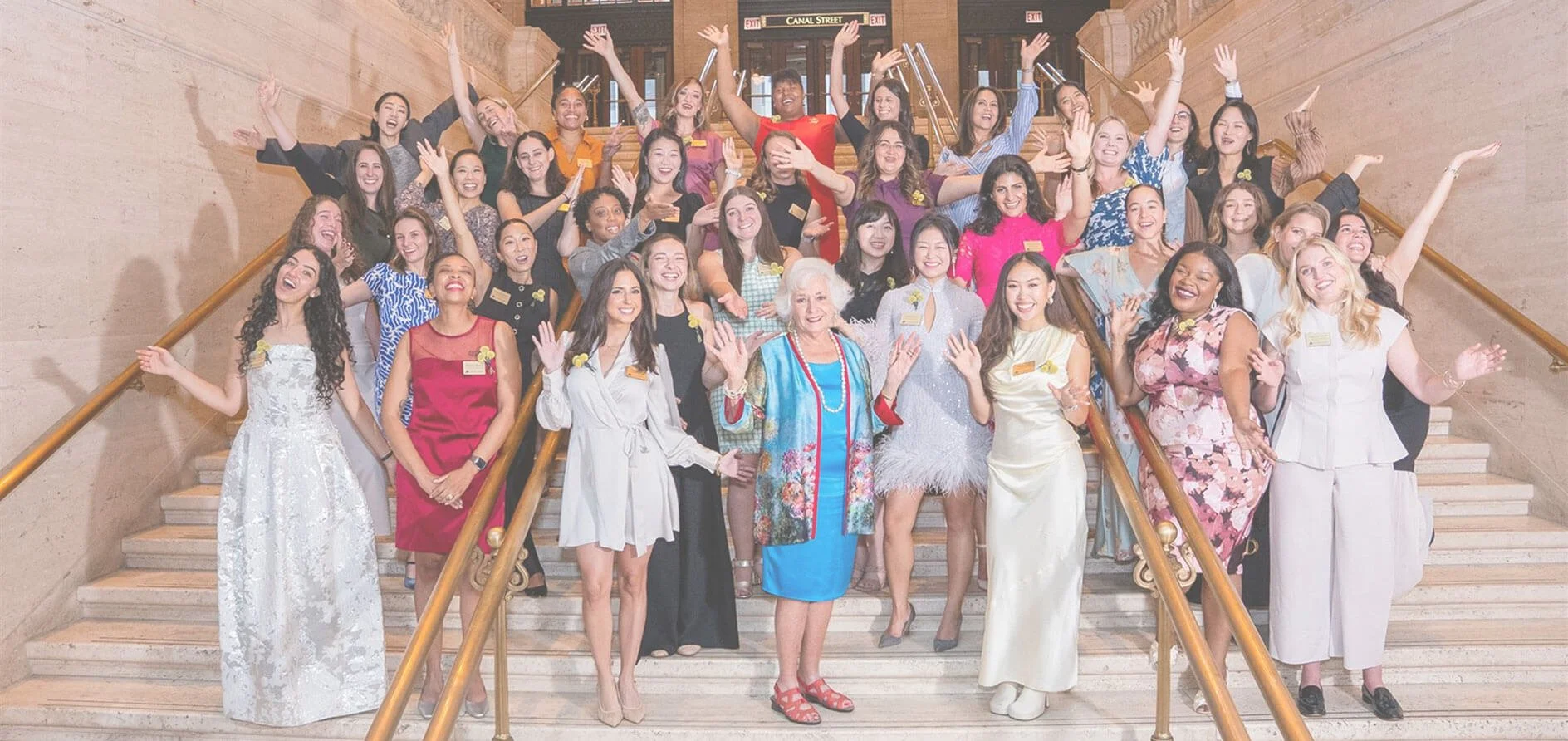
Goldie: And so I wanted to encourage these young women, and these are already in graduate school, they're already specializing in real estate, we give them financial support and then they have these mentors that help them through the first year, sometimes the second year.
We network with some of the senior people in the industry, and that's what really gives them. That confidence, the edge, and these women are from all over the country. We've graduated over 200 young women and they're at the best schools. We're in the Midwest now. We've put a big effort in going to the East coast. We're in New York, Philadelphia, Washington. So I think, yes, there's been a tremendous change and I think our initiative is helping that change.
Brian: These young real estate professionals are affectionately called the Goldie Scholars. I asked Goldie about her original hopes for the organization.
Goldie: I did not have a vision when I started the Gold Initiative at all. I wanted to give back. When I sold my company to New York Stock Exchange Company, I said I wanted to give back to an industry that has given me so much.
Brian: Right.
Goldie: I started giving scholarships.to one school. And then, you know what, sometimes you have to be lucky instead of smart, and it hit a mark. With volunteers. Our board is spectacular. We had volunteers now, I think almost 300 volunteers working on this initiative nationwide.And when I mean volunteers, I'm talking about mentors, leadership, training in that arena.
Brian: That's awesome. The Goldie initiative has four pillars, as I understand it. Scholarship, mentoring, leadership development, and networking.
Goldie: You read our annual report, right?
Brian: That's right. So were those always kind of a part of it? How did those four pillars come about?
Goldie: It started from the beginning. I just didn't wanna give money for a scholarship and for them to go off into the sunset. It was very important. And,the first school that we gave money to, really talked about that, to get involved with the young people, not just, as I said, dole out dollars.
But, I didn't know, quite frankly, how important mentorship was. I didn't have a clue till maybe 2, 3, 4 years into the program, that these young scholars, the mentors that they had, they spent time with, and they were together for a year or two years, but then even after these scholars graduated, their mentors continued to be involved.
Cindy: If you talk to any of the scholars, they would say it was the other pillars that really were the strongest benefits. Of course, they like the money, but it's the mentorship. Each scholar gets a one-on-one mentor that is very thoughtfully selected as to what they wanna do in their future.
The leadership development, there are monthly meetings, weekly opportunities to meet with Goldie and other senior women in the industry, and then the networking portion opportunities to network with different people, so when they come outta school, the network is very strong and wide, and they have different people they can go to when they're looking for a new job.
Goldie: But, you know, in our industry, in most industries, networking, being able to talk to other people, learning, you're not gonna get that all in school. And the mentors are just so giving.
Brian: Goldie had no idea that the initiative would have so much influence on the real estate industry… enough influence for a big, annual, party…
Goldie: We have a gala, which I had nothing to do with, that has the largest real estate turnout in the city. We have a thousand guests once a year. They call Goldie Gala. I never wanted a gala.
Cindy: She first said, I don't wanna sit down dinner where everyone has to listen to a bunch of people speak and you sit with the same person for the entire dinner. I want networking on steroids. She's very adamant that the program at the gala is 30 minutes long, not longer.
She wants to just hit the highlights and then she really wants people to network, that's what it's really become. And what's been very interesting is, Especially the industry in Chicago, the real estate industry, all our dinners, all our galas in the marketplace used to be sit down dinners, and they've all pretty much adopted Goldie's way of doing this, where it's no longer sit down dinners.
There's very few, most of them are networking cocktail parties such as the Goldie Gala. She's a trendsetter in that regard.
Goldie: So a lot of these fantastic ideas are other people's visions, and I'm just sometimes in awe. Two or three years ago, I rode the escalator up to the gala and I saw a thousand people there. I was in awe.
Brian: The first Gala was held in 2017 to celebrate the 10th year of the Initiative. Goldie noted that the first time they raised money, it totaled $60,000 but as of 2025 the Goldie Gala had 44 Gala Vice chairs, more than 200 sponsors and raised over 1.2 million dollars.
Goldie: It is supported by the entire real estate industry when you look at our guest list as to who are our sponsors. Its very humbling
Brian: Some of those sponsors include the Chicago Title Insurance Company, Capital One, and Millbrook Properties. Of course the Gala is a fun experience because it has a cocktail party feel to it, but for the Goldie Initiative, the focus after the party always remains on what is most important – the people.
Goldie: And the most I get out of is talking to these scholars. These scholars are the best of the brightest. I do Wednesdays with Goldie, which means every Wednesday I talk to at least one or two scholars. We talk on one-on-one. And these young women have vision, they have drive, they're hardworking.
As I say to the, our volunteers, I get more than I give, and I think they all agree because it's so rewarding to see the enthusiasm, which is something that we're always proud of.
Goldie: I wish I could take all the credit. If you wanna gimme all the credit, that's fine. I'll take it. But it's, it's a hard work and determination of all the people that have worked so hard over the last 20 years to make it where it is today. I'm told it's the largest program of its kind in the country.
Brian: That's awesome.
Goldie: I think we have 40 scholars now and we're going into the East coast, so we're looking at 50. And it could be as big as, as much money as we raise is as many scholars as we can provide. And it only started with two or three in the beginning. And when I first started, the biggest concern I had was I, is anyone gonna fill in the application?
'Cause it's quite an extensive application. and now, it's the other way around. We have more applications than we're able to fill the slot.
Brian: You mentioned that you get more out of it than you put into it, which is. A fantastic statement, 'cause I know how much you put into it. I'm curious, as you look at your best mentors or the individuals that participate most from a mentoring perspective, what type of common traits do they have? What makes a good mentor?
Goldie: It is an attitude. It is absolutely not a position. It's interesting. we have the sheroes, every year we nominate Shero, which is obviously a female hero.
Cindy: a woman who's helped change corporate culture to allow more women to succeed.We're looking for a woman who has been in the real estate industry that her achievement served to aspire others. In our industry, it's typically somebody who's mentored other women, but it's just really a woman in the marketplace who's done a lot for other women in the marketplace to help their careers.
Goldie: And you look at this, the sheroes we had the last seven or eight, and they've been spectacular. They're all top of the line. In their field, but they all give back. And I've also said, and I believe you gain in that it's not so much you gain in terms of feels good. I learn from these young scholars. I learn in terms of adding a dimension in terms of what has taken them to where they wanna go.
Brian: It's clear that these scholars hold a dear place in Goldie's heart, and so does the Windy City. In fact, one of her favorite projects has Chicago roots.
Goldie: I represented Oprah Winfrey in her purchase of her studio in downtown Chicago.
Brian: Nice.
Goldie: It wasn't a big deal, it was just an interesting story. I got a call from her manager and said, we've been reading about you and we'd like you to represent Oprah to buy a recording studio.
It was called Nile Studio, but he said. You have to buy it in your name so that they don't know it's Oprah. So I worked with Oprah. It was a fun thing in terms of meeting her and seeing what her vision was.
Goldie: Now, the sale of the studio was a very small amount of dollars, I don't know, two, $3 million, but she put $40 million into it, But what was exciting to me wasn't just working with Oprah. She revitalized that entire area, that whole West Loop. She was the first one and now they have office buildings and they have restaurants and they have people living there. So she started that entire West Loop gentrification. And that was just, a fun deal.
I represented a building called Three First National Plaza. It was a Gerald Hines building.It was one of the largest new buildings in downtown Chicago. But the most interesting part about it was I had a pre-lease. You know what pre-leasing means?
Brian: Describe that for us.
Goldie: Okay. Up to the time I worked on this project, which has to be, it's gotta be 40 years ago, developers would build a building, these big sky, high rise office buildings, and then they'd fill it, right?
Then they would fill tenants and on. Jerry Hines outta Texas never did that. And he said to me, he said, you gotta pre-lease it and we're gonna give you a model office, the top of it was First National Bank. We'll show you what it looks like. You have to convince 1,000,002 feet of tenants that this is the building of their choice with ever without having a shovel in ground.
Goldie: They can't see it, but you have to convince them this is the building of their dreams. Well, we never did this in Chicago, ever. So they had, the Heinz people outta Texas built me a model office on the top floor. And it was a, I dunno, five, 10 minute presentation. And at the end of the presentation, and you're actually looking down the site. It was so exciting, so amazing. And we were able to pre-lease the building 600,000 square feet without a shoveling ground.
Brian: Wow. And that was new. People hadn't done that
Goldie: Never, well, maybe someplace else in the country,
Brian: But not in Chicago.
Goldie: Never in Chicago. And we were able to, bring, I think, law firms, accounting firms, prestigious, consulting groups. And it was a fun project. I thought it was very very special. And then now, pre-leasing is obviously a given in Chicago, but that was the first time pre-leasing ever occurred in Chicago.
Brian: Goldie, you're so fun to talk to looking forward what should companies do today, whether they're in real estate or not, to help support women being involved and being executives?
Goldie: Well first they can come to the Goldie Gala. Because it is very important for the companies to be supportive. I think it's important to support their own people
Brian: Yep.
Goldie: In terms of, whether it's sending 'em to school or sending 'em to programs and helping them along with their growth.
And it's not dollars. And success across the board in terms of it's not always financial, but success is pride. Pride of what they do. success is pride of growth that, you know, over the time they feel like they're. productive and growing, pride of, friendships, people like to work with, people they like to work with, that they look forward to. I always looked at my clients as my friends, and they become people that I like being with.
It's a success of your level of accomplishments could be entrepreneurship. It could be success of your name. There's so many definitions. and I think that's what I try and talk to the young scholars with in terms of, you'd have to define your own success.
Brian: Yeah. That's nice. Well, Goldie, it has been a pleasure, honestly, to talk with you. When is the next Goldie Gala?
Goldie: This is such a great question.The third week of September, on a Thursday.
Brian: Can I come? I'm assuming there's a way,
Goldie: Sure. you know what, I'm not even gonna ask you to pay for your ticket. I'll pay for your ticket.
Brian: I can pay. But I'd be happy
Perfect. I can't wait to meet you in person and thank you for taking the time. I really appreciate you just being willing to chat with me. It's been very good.
Goldie: Well, let me tell you, if it weren't for Cindy, I probably wouldn't say yes because you terrify me, but she, here's a perfect example of somebody like a Cindy, in terms of not only hardworking, not only determine, not only successful, but she's given back to the community in terms of her efforts at ULI.
She's been a mentor here. She was the co-chair of the gala this last year, 1,000,002 in terms of raised. and that's just, that's just spectacular. So multiply her by the 300 volunteers that are so committed to helping the next generation. How terrific is that?
Brian: The 2026 Gala will be held Thursday September 17, 2026. We hope everyone who listens to this podcast will join the Goldie Initiative at Chicago’s Union Station for a fun and productive evening.
Brian: I want to thank both Goldie and Cindy for telling us about the bold work that they are doing through mentorship.
Brian: Don’t miss the stories from past seasons. If you haven’t caught up, now is the perfect time. Built is available on all major podcast platforms, and if you’re enjoying the show, we’d love for you to leave a rating or review!
(SCORE SOLO)
Brian: Built is a co-production of Fidelity National Financial and PRX Productions. From FNF, our project is run by Annie Bardelas. This episode of Built was produced by Emmanuel Desarme. Our Senior Producer is Sandra Lopez- Monsalve and our editor is Genevieve Sponsler. Production support by Adriana Rivera. Audio mastering by Rebecca Seidel. The location producer for this episode was Jake Shore.
The Executive Producer of PRX Productions is Jocelyn Gonzales.
I’m Brian Maughan.
Thanks for listening to BUILT, where we explore bold developments in distinct markets, reshaping our BUILT world.